
Quick Summary:
A clear custom millwork specification should cover profile drawings, wood species, finish grade for paint or stain, dimensions, quantities, and the delivery timing your project requires. Bringing Heritage Millworks into the conversation early helps architects, designers, and contractors identify production details before fabrication begins—reducing revisions and helping keep projects moving across Charlotte, NC, and North and South Carolina.
Custom millwork turns an architectural idea into a finished detail that defines the space. Whether you are designing a distinctive crown profile, matching historic baseboard, specifying paneling, or coordinating a production run for a residential or commercial project, the quality of the information provided up front has a direct effect on accuracy, lead time, and installation readiness.
At Heritage Millworks, we work directly with architects, designers, builders, cabinet shops, and contractors to manufacture Architectural Millwork
that fits the project—not the other way around. Here is what architects need to specify for custom millwork and how to prepare a package that supports a smooth path from design through fabrication.
Start With Clear Drawings and Profile Information
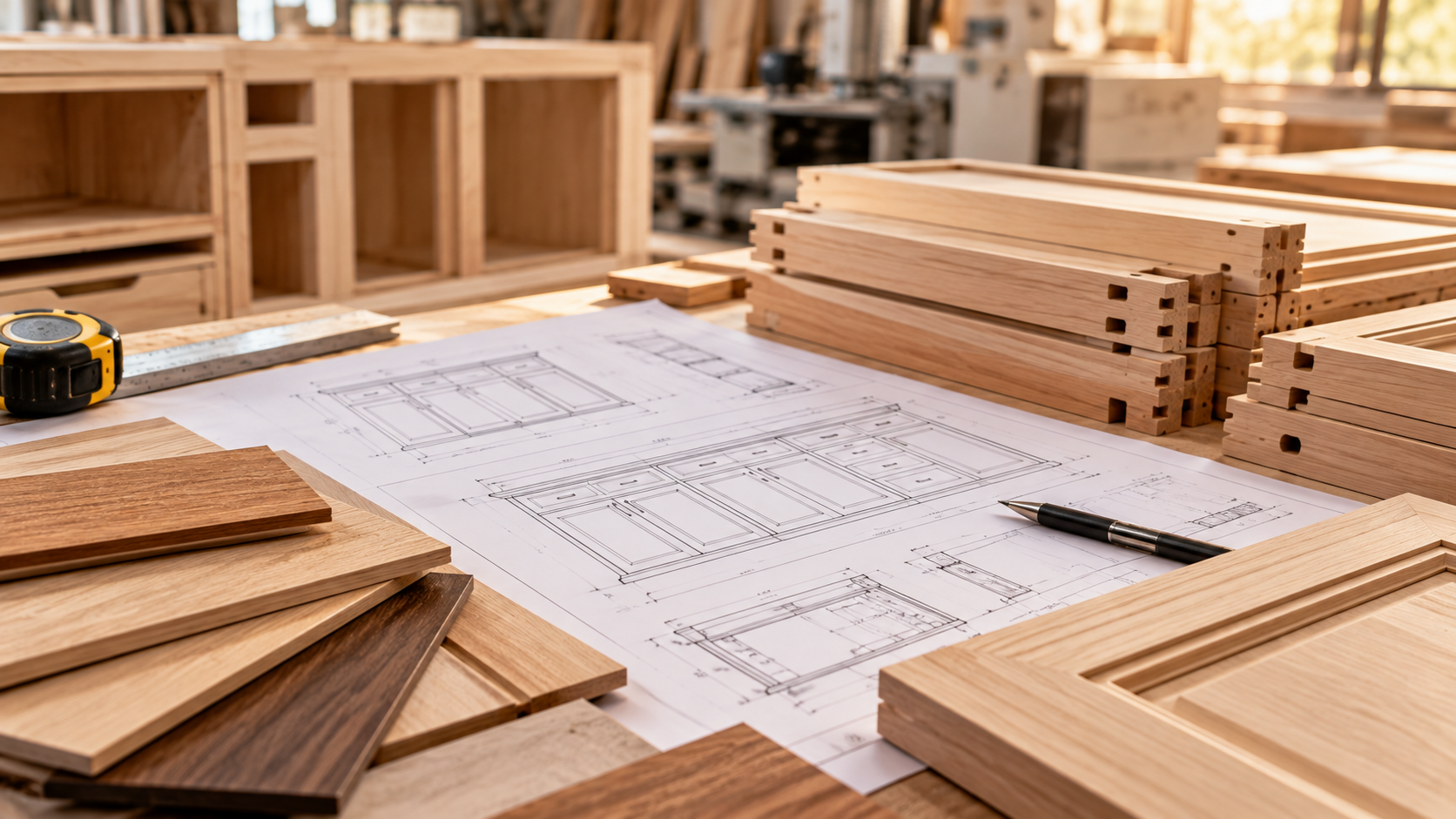
The first step in how to specify custom millwork is defining the intended shape and application. A dimensioned profile drawing is the most useful starting point for molding, trim, casing, baseboard, crown, chair rail, and other repeated components. Include face dimensions, projection, reveal details, radii, joinery considerations, and any transitions that affect how pieces meet in the field.
If the project calls for a custom profile, provide a scaled drawing, CAD file, PDF detail, section view, or physical sample when available. Photos of existing millwork can be helpful for context, particularly in renovation or historic-match work, but they should be paired with measurements whenever possible. For inspired-by or matching details, Heritage Millworks can review the information and help determine the best path to a producible profile.
For specialty molding, explore our Custom Trim Profiles
capabilities. Identifying the profile early allows the manufacturing approach, tooling needs, material yield, and production schedule to be evaluated before the project reaches a critical deadline.
Specify the Wood Species and Material Grade
Wood species affects appearance, stability, machining, cost, and finishing. A complete specification should name the intended material and clarify whether the millwork is stain-grade, paint-grade, clear-grade, or another defined standard. Common options may include hardwoods selected for visible grain and stain performance, as well as paint-grade materials chosen for a smooth, consistent finished appearance.
For stain-grade work, identify the desired species, grain character, and color direction. A natural finish on one species can look very different from the same finish on another, so finish samples or approved reference images are valuable. For paint-grade work, note the desired substrate and level of surface refinement, especially when the millwork will be installed in highly visible areas with detailed lighting.
It is also helpful to identify where the material will be used. Interior trim, feature walls, cabinetry components, decorative elements, and moisture-sensitive spaces can have different performance considerations. Heritage Millworks can review the intended application and help align material choices with the design intent.
Define Finish Expectations Before Fabrication
Finish details should be more specific than “paint” or “stain.” Note whether components will arrive unfinished, primed, painted, stained, or clear coated. If a finish will be completed by another trade, communicate that requirement so the millwork can be prepared appropriately for the next step.
When specifying a painted finish, include the paint system or sheen if it is known, along with any color reference. For stained work, provide the stain color, desired tone, sheen, and an approved sample or visual reference when possible. Grain, wood variation, lighting, and topcoat selection all influence the final appearance, so sample approval is especially important for prominent architectural millwork.
Clear finish requirements protect both the design vision and the schedule. They also help prevent a common source of revisions: assuming a material marketed as paint-grade or stain-grade will perform identically without confirming the final finish process.
List Dimensions, Quantities, and Installation Conditions
Accurate dimensions are essential, but custom millwork specifications should also communicate how the pieces function within the larger project. Include overall lengths, section sizes, thicknesses, width tolerances, room-by-room quantities, and locations. For repeated profiles, a takeoff organized by profile type and length is often the clearest format.
Architects and designers should also flag conditions that may affect fabrication or installation: out-of-square walls, curved surfaces, oversized pieces, transitions between materials, built-ins, door and window locations, finished-floor elevations, and existing conditions. If a detail requires site scribing, field trimming, pre-mitered returns, or sequencing with another trade, identify that in the drawing package.
For large or complex scopes, a schedule can help everyone stay aligned. List the item name, profile, material, finish, dimensions, quantity, location, and any special notes in one place. This gives the contractor and Heritage Millworks a practical reference throughout production.
Plan for Delivery Timing and Project Sequencing
Delivery timing is part of the specification, not an afterthought. Share the project schedule, required-on-site date, installation sequence, and any phasing requirements as early as possible. Custom fabrication requires time for drawing review, material selection, machining, finishing when applicable, quality checks, packaging, and delivery coordination.
Early notice is particularly valuable when the scope includes custom profiles, specialty species, finish matching, or larger production quantities. It enables Heritage Millworks to identify long-lead decisions before they become field delays and to coordinate an approach that supports the contractor’s schedule.
For projects in Charlotte, NC, throughout North Carolina, and across South Carolina, clear delivery planning also helps account for jobsite access, storage conditions, unloading needs, and whether installation support is part of the scope.
What to Send Heritage Millworks
A strong initial inquiry does not need to be perfect. The goal is to give our team enough information to understand the design, scope, and timeline. Send the materials you have available, such as:
- Dimensioned elevations, sections, details, or profile drawings
- CAD files, PDFs, sketches, or photos of existing conditions
- Wood species and paint-grade or stain-grade requirements
- Finish references, color information, and sample expectations
- Quantities, lengths, and installation locations
- Project address, delivery needs, and target schedule
- Notes about special machining, CNC work, matching details, or field conditions
Heritage Millworks reviews the information with the project team, asks focused questions where clarification is needed, and helps translate design intent into a fabrication-ready plan. Our direct-manufacturer approach gives trade professionals a practical partner for custom components, production support, and architectural details. Learn more about working with us through Trade & Design Partners.
Collaboration Reduces Revisions
The best time to solve millwork questions is before material is machined. Early collaboration can reveal whether a profile needs adjustment for durability, whether a dimension affects installation, whether a species is suited to the finish, or whether an alternate fabrication approach will better support the budget and schedule.
Heritage Millworks combines custom woodworking knowledge with precision manufacturing to help architects, designers, and contractors move from concept to finished product with confidence. From custom molding and trim to CNC millwork and specialty parts, we serve projects throughout North and South Carolina with the attention to detail that custom work requires.
FAQ
What is the most important information in a custom millwork specification?
Start with a clear drawing or profile, material selection, finish grade, dimensions, quantities, locations, and required delivery date. Together, these details establish the design intent and production scope.
Can Heritage Millworks make a profile from an existing sample?
Yes. A physical sample, detailed drawing, or measured photos can help us evaluate a matching or inspired-by profile. The more complete the reference information, the more accurately we can plan fabrication.
Should millwork be specified as paint-grade or stain-grade?
Yes. This distinction affects material selection, surface expectations, and finishing results. Specify it early and include finish references whenever the appearance is important to the design.
When should we involve a millwork manufacturer?
Involve the manufacturer during design development or before final construction documents whenever possible. Early input can reduce revisions, clarify lead times, and help confirm that the detail can be fabricated efficiently.
Does Heritage Millworks work with trade professionals?
Yes. We work with architects, designers, contractors, builders, cabinet shops, and other trade partners on custom millwork, trim, CNC fabrication, and production support.
Ready to discuss your next custom millwork specification? Start a trade inquiry with Heritage Millworks to share your drawings, scope, and project timeline.
Discover helpful insights, expert advice,
and practical information
on topics that matter to you.
Ready to Get Your Millwork into Production?
Submit a project inquiry through our contact form or call our shop directly.
Our team is available Monday through Friday, 7 AM to 3 PM, and responds to all inquiries within one business day.