
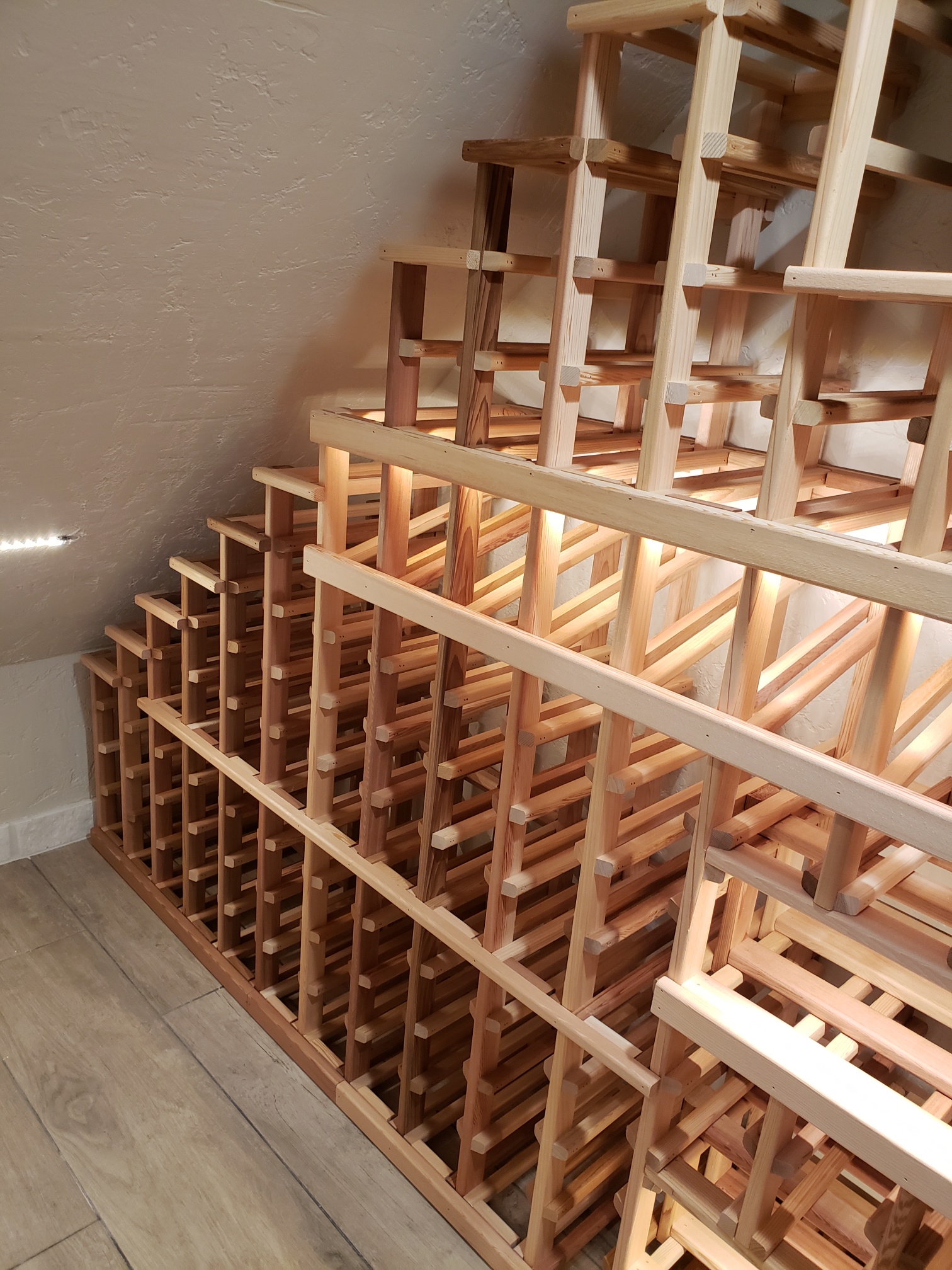
The space beneath a staircase is one of the most efficient places to add dedicated wine storage without expanding your home’s footprint. With thoughtful planning, custom wood racking can be built to follow the stair line, turning an overlooked area into a beautiful, functional wine room that feels intentionally designed.
For homeowners in North and South Carolina, an under-stair wine room can range from a compact display for favorite bottles to a climate-controlled collection space with hundreds of bottles. The right design begins with how you want to store, access, and enjoy your wine—then brings that vision to life through quality wood craftsmanship.
Start With the Shape of the Space
Every under-stair area has its own proportions. Some have a tall entry and a sharply descending ceiling; others are wide, shallow, or tucked beside a hallway. Rather than fighting those angles, a custom design should use them. At Heritage Millworks, we can manufacture wood racking that steps down with the staircase, making practical use of low-clearance areas while reserving taller sections for display rows, case storage, or a serving surface.
Begin by considering the available depth, the highest and lowest ceiling points, door placement, and how the room connects to the rest of the home. A glass door can make a compact wine room feel open and showcase the collection. A solid wood door may suit a more traditional home or help create separation from a busy living area. Either approach benefits from a layout designed around the actual dimensions of your staircase—not a one-size-fits-all rack.
Choose a Layout That Matches Your Collection
The best under-stair wine room design is based on the bottles you own now and the way you expect your collection to grow. A homeowner who keeps a rotating selection for dinners and celebrations may prefer label-forward display rows and easy-access cubbies. A collector aging bottles for years may need more individual bottle storage, bulk bins, and room for wood cases.
Common layout options include:
- Wall-to-wall custom wood racking: Ideal for maximizing capacity along the long side of the stairwell.
- Display-and-storage layouts: A mix of horizontal bottle rows, angled display shelves, and diamond bins creates visual interest.
- Walk-in wine rooms: When depth allows, racking can line both sides with a clear path through the center.
- Feature-wall designs: A prominent rack at the tall end of the room can become a focal point visible from the adjacent living space.
Heritage Millworks designs and manufactures Custom Wine Rack Systems
that make the most of irregular ceiling lines and tight dimensions while keeping the room organized and easy to use.
Let Custom Wood Racking Set the Tone
Wood is the foundation of a warm, enduring wine room. Unlike modular components that can leave awkward gaps beneath a staircase, custom wood racking creates a built-in look that follows the architecture of the home. It can be designed with clean, contemporary lines, traditional trim details, or a more rustic character depending on the surrounding finishes.
Wood craftsmanship also creates flexibility. Individual bottle slots, horizontal display rows, X-cube storage, case compartments, tasting shelves, and cabinetry can be combined in one coordinated system. If your collection includes Champagne, magnums, or larger-format bottles, those dimensions can be planned into the rack from the beginning. This thoughtful approach is especially important in compact spaces, where every inch should serve a purpose.
For homeowners considering a larger project, explore Heritage Millworks’ Wine Rooms & Cellars
for ideas that balance storage capacity with handcrafted detail.
Use Metal Racking as a Complement, Not a Replacement
Integrated metal racking can add contrast and a modern accent to a wood-centered design. For example, a slim metal display section may highlight a favorite group of bottles, create a floating-bottle effect, or add a clean visual break between larger wood rack sections. Used selectively, metal complements the warmth and craftsmanship of custom wood without taking over the room.
A popular approach is to pair wood perimeter racking with an integrated metal display wall or a few metal presentation rows near the entrance. This combination works well in transitional and contemporary homes, especially when other metal finishes—such as black hardware, bronze fixtures, or steel-framed glass doors—appear nearby. The result is layered and intentional: wood provides the storage structure, while metal adds a refined design detail.
Add a Live Edge Countertop for Character
An under-stair wine room does not need to be only about bottle storage. If the space has enough height and depth, a custom countertop can create a useful serving area for opening bottles, arranging glassware, or displaying decanters. A live edge wood countertop is an especially distinctive choice because it preserves the natural contour of the slab and gives the room a one-of-a-kind focal point.
Pairing a live edge surface with custom wood racking brings natural texture into the design while still feeling polished. It can be supported by cabinetry, floating brackets, or integrated into a taller rack section. A small countertop may also make the wine room more enjoyable for entertaining, even when the overall footprint is limited.
Plan Lighting Around Function and Atmosphere
Lighting should make it easy to read labels and enjoy the room without generating excess heat. Warm LED strip lighting beneath shelves, recessed ceiling fixtures, and subtle display lighting can all work well. In a glass-fronted under-stair wine room, lighting often becomes part of the view from the surrounding space, so it should be soft enough to feel inviting rather than overly bright.
Choose low-heat fixtures, avoid direct sunlight, and consider placing lighting on a dimmer. Wood tones often look best under warm, balanced light that highlights the grain and finish. If metal accents are included, thoughtful lighting can also create subtle reflections that add depth without distracting from the bottles.
Do Not Overlook Cooling and Environmental Control
Whether you need active cooling depends on the location of the staircase, your home’s temperature patterns, and the type of wine you plan to store. For short-term storage in a stable interior area, a climate-controlled wine room may not always be necessary. For long-term aging or larger collections, however, maintaining consistent temperature and humidity is important.
Before building, consider insulation, vapor barriers, door seals, ventilation, and the location of any cooling equipment. A wine cooling professional can help determine the right system for the room’s size and expected heat load. Planning these details early protects both your wine and the custom woodwork surrounding it.
Select Finishes That Connect to Your Home
The finish of your racking should feel connected to the rest of the house. Natural wood finishes can showcase grain and bring warmth to a modern interior. Rich stains can support a traditional look, while painted cabinetry or contrasting backing panels can create a more tailored design. Architectural millwork, trim, and cabinetry details can help the wine room feel like a seamless extension of the home rather than an afterthought.
Heritage Millworks works directly with homeowners, designers, builders, and contractors to create custom wine rooms throughout North Carolina and South Carolina. Browse Our Work
to see how tailored wood craftsmanship can transform a small or challenging area into a standout feature.
FAQ
Can a wine room really fit under a staircase?
Yes. Under-stair spaces are often excellent candidates because custom racking can be built around sloped ceilings, limited depths, and unusual corners. A site-specific design determines the right storage capacity and access plan.
How many bottles can an under-stair wine room hold?
Capacity depends on the footprint, ceiling slope, rack configuration, and bottle sizes. Custom wood racking typically makes better use of the available space than standard freestanding racks.
Does an under-stair wine room need cooling?
It depends on your goals and the conditions in the home. Collections intended for long-term aging generally benefit from controlled temperature and humidity, while short-term storage may have different requirements.
Can I combine wood and metal wine racking?
Absolutely. Custom wood racking can provide the primary structure and storage capacity, while integrated metal racking adds a contemporary display element or visual contrast.
What should I do before building a wine cellar or wine room?
Think through storage needs, access, cooling, insulation, lighting, finishes, and how the space will look from nearby rooms. A professional consultation helps align these decisions before fabrication and installation begin.
Ready to turn the space beneath your stairs into a handcrafted wine room? Request a free consultation with Heritage Millworks to discuss your custom wood racking, wine room design, and installation options.
Discover helpful insights, expert advice,
and practical information
on topics that matter to you.
Ready to Get Your Millwork into Production?
Submit a project inquiry through our contact form or call our shop directly.
Our team is available Monday through Friday, 7 AM to 3 PM, and responds to all inquiries within one business day.