
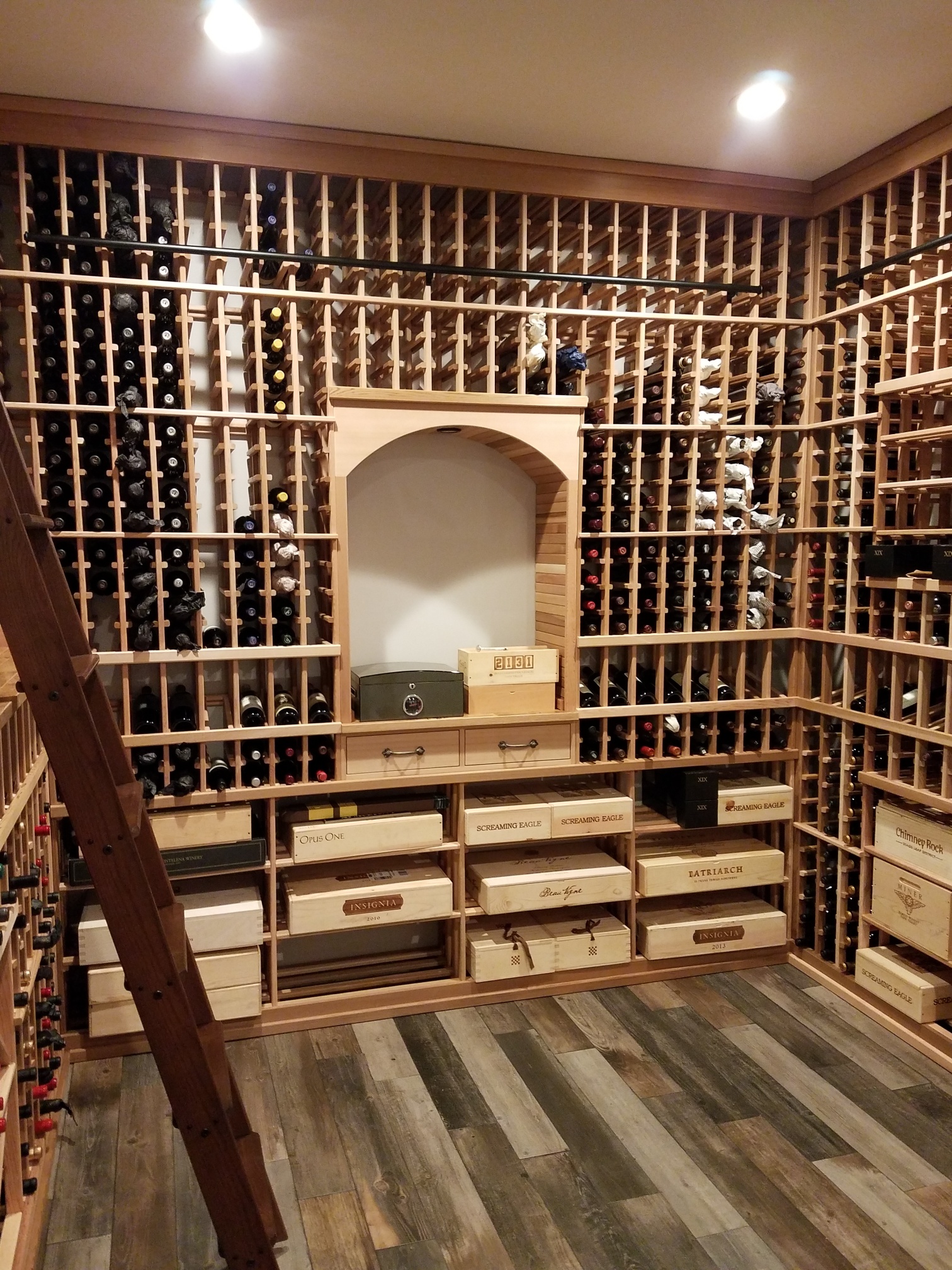
A wine cellar is traditionally built below grade, where the surrounding earth naturally supports a cooler, more stable environment. A wine room can be created in nearly any properly climate-controlled space, from a spare room to an under-stair enclosure. Whichever option you choose, both require proper insulation, a vapor barrier, and a dedicated cooling approach to protect your collection and the investment in your home.
For homeowners throughout Charlotte, NC, and the Carolinas, the right choice comes down to your home, collection, goals, and preferred design. Heritage Millworks designs and builds custom wine rooms and wine cellars that balance dependable storage conditions with handcrafted style.
Start With the Right Location
Location is one of the first decisions to make because it affects construction scope, cooling requirements, accessibility, and cost. A traditional cellar is often located in a basement or another below-grade area. These spaces may offer a head start on temperature stability, but they still need a properly designed enclosure to keep warm household air and moisture from affecting the wine.
A wine room is more flexible. It can be built in a dining-room alcove, pantry, bonus room, conditioned garage area, or a space beneath the stairs. The key is separating the wine environment from the rest of the home with the right wall assembly, door, insulation, vapor barrier, and cooling system. Heritage Millworks helps clients evaluate a proposed location before custom wine racking or finishes are selected.
Plan for Your Collection Size and Growth
Your current bottle count matters, but your future collection matters just as much. A room built only for the bottles you own today can quickly feel undersized if you enjoy collecting, entertaining, or buying wine by the case. Before building, think about how you purchase wine, how long you typically age bottles, and whether you want storage for large-format bottles, magnums, champagne, or wooden cases.
Custom wine racking gives you the freedom to allocate space intentionally. You may want individual display rows for favorites, diamond bins for bulk storage, display shelves for special bottles, or a tasting area that turns storage into an experience. With thoughtful Wine Cellar Design & Planning, your room can feel organized now and remain useful as your collection evolves.
Protect Wine With Temperature and Humidity Control
Wine storage is not simply about making a room cold. Most collections benefit from stable temperatures around 55°F, with relative humidity commonly maintained in a range that helps preserve corks and labels. Sudden swings in temperature or humidity can be more harmful than a brief variation, which is why a dedicated system and a properly sealed room work together.
Cooling equipment should be selected based on the room size, location, insulation value, heat exposure, glass area, and how often the door will be opened. A system that is too small may run constantly without maintaining conditions; one that is poorly matched to the enclosure can create condensation or performance issues. Explore Wine Cellar Cooling Systems
to understand the options and why planning the enclosure before installation is essential.
Do Not Overlook Insulation and Vapor Barriers
The wine racks may be the feature everyone notices, but the unseen construction details protect the entire project. A wine room or cellar needs adequate insulation and a continuous vapor barrier installed on the warm side of the enclosure. These layers limit heat transfer and control moisture movement, helping the cooling system operate efficiently and reducing the risk of condensation inside walls.
This is particularly important in Charlotte, NC, and across the Carolinas, where humid summers can put extra pressure on a cooled wine space. Doors, glass, lighting penetrations, and HVAC interfaces also need careful attention. Heritage Millworks approaches each project as a complete environment—not just a rack installation—so the finished space looks refined and performs as intended.
Choose Materials That Fit the Environment and Your Home
Materials influence both appearance and durability. Wood remains a popular choice because it can create anything from a warm, traditional cellar to a clean, contemporary wine room. Species, stain, finish, and rack configuration can be customized to complement nearby cabinetry, flooring, millwork, or furnishings.
Glass doors and walls can create a striking display, but they need to be appropriate for a climate-controlled enclosure. Lighting should showcase the room without adding unnecessary heat or exposing bottles to excessive UV light. Details such as custom crown molding, paneling, metal accents, stone, and a tasting counter can further connect the wine room to the rest of the home. As a custom woodworking manufacturer, Heritage Millworks can build a tailored solution rather than forcing your collection into a standard layout.
Set a Realistic Budget
Wine room budgets vary widely because every project has different construction conditions and design priorities. Major factors include the size of the space, whether walls must be built or modified, cooling equipment, electrical work, insulated glass, door selection, custom racking, wood species, finishes, and decorative features.
It is helpful to separate the budget into two categories: the conditioned enclosure and the visible cabinetry or racking. Investing in the first category protects the second. A beautiful room without the proper building components can lead to costly corrections later. For a closer look at pricing considerations, review our Wine Room Cost Guide.
Match the Design Style to How You Will Use the Space
Some homeowners want a private, storage-first cellar; others want a glass-front wine room that becomes a focal point for entertaining. Neither approach is better—they simply serve different purposes. Consider whether guests will see the space, whether you want a tasting area, and how much of the collection you want on display.
Traditional designs may feature rich wood tones, arched displays, and detailed millwork. Modern wine rooms often use clean lines, glass, open bottle presentation, and integrated lighting. Heritage Millworks works with homeowners, designers, architects, and builders throughout the Carolinas to create rooms that feel intentional within the larger home.
FAQ
Is a wine room the same as a wine cellar?
They serve the same core purpose: storing wine in a controlled environment. A wine cellar is traditionally below grade, while a wine room can be built in any suitable climate-controlled area of the home.
Can I build a wine room on the main floor?
Yes. Main-floor wine rooms are common when the space is properly insulated, sealed with a vapor barrier, and paired with appropriately sized cooling equipment.
How many bottles should a wine room hold?
The right capacity depends on your buying habits and collection goals. Planning room for future growth, specialty bottle sizes, and case storage usually creates a more functional long-term result.
Does a wine room need a dedicated cooling system?
In most cases, yes. Standard home HVAC is not designed to maintain the stable temperature and humidity conditions a wine collection needs. A dedicated system should be selected as part of the overall design.
Who can help design and build a custom wine space?
Heritage Millworks designs, manufactures, and installs complete custom wine rooms, wine cellars, and wine racking for homeowners throughout North Carolina, South Carolina, and surrounding areas. Visit Wine Rooms & Cellars to explore what is possible, then request our Wine Room Buyer Guide to begin planning your project.
Discover helpful insights, expert advice,
and practical information
on topics that matter to you.
Ready to Get Your Millwork into Production?
Submit a project inquiry through our contact form or call our shop directly.
Our team is available Monday through Friday, 7 AM to 3 PM, and responds to all inquiries within one business day.